Vivarium Cave
by A.N. Hitchcock, 1984
This is an extract from from the 1984 SASA Bulletin
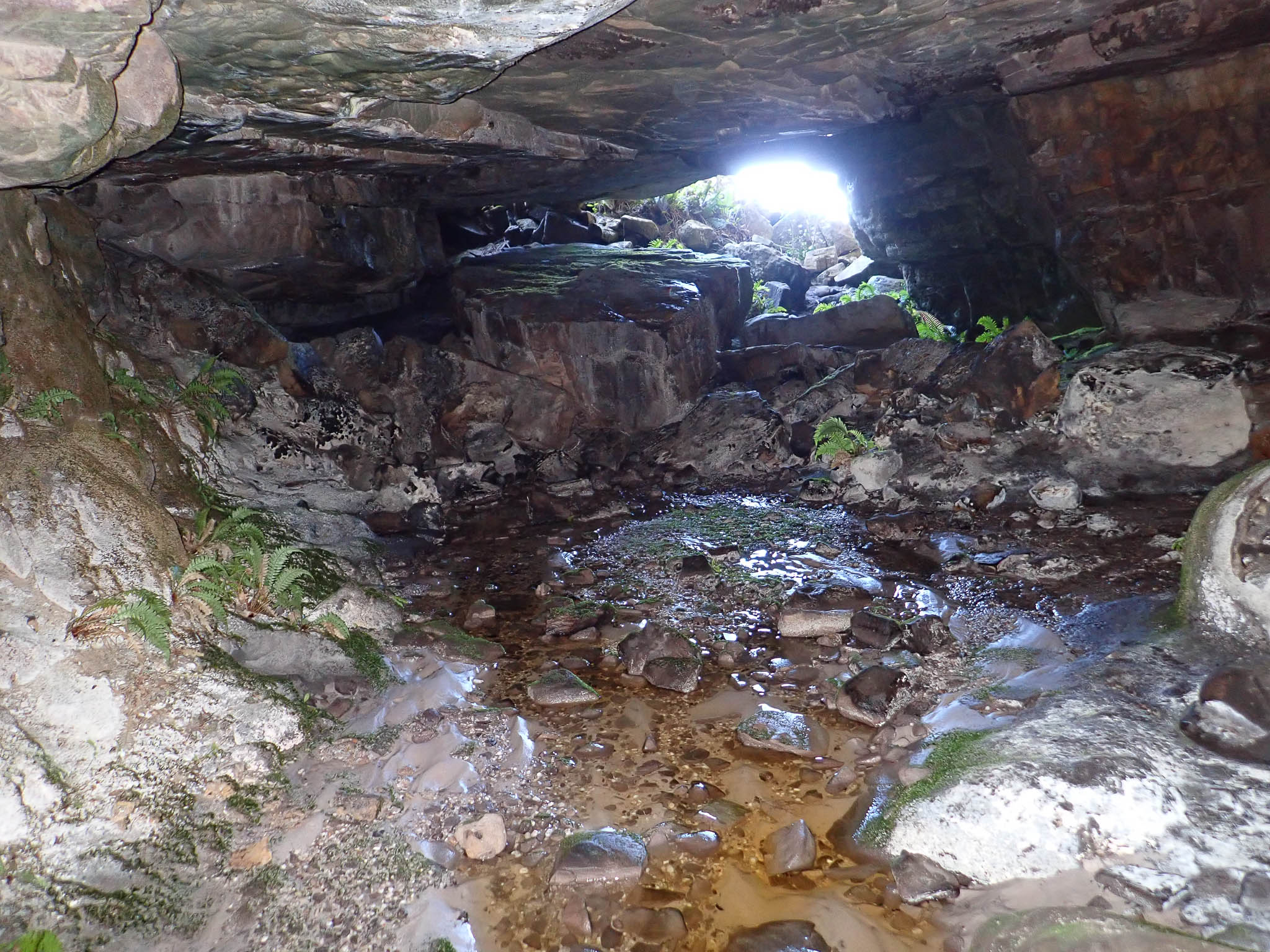
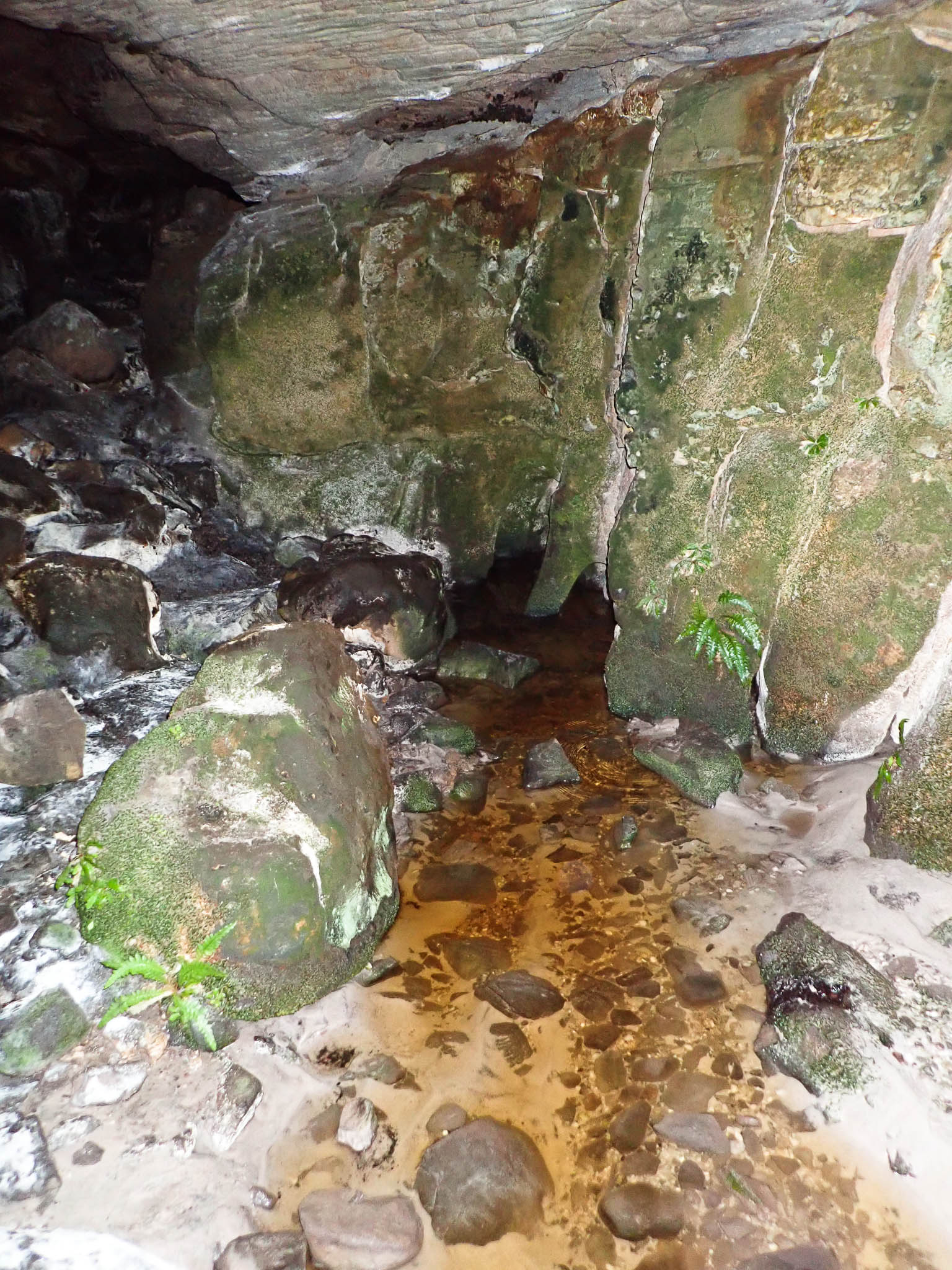
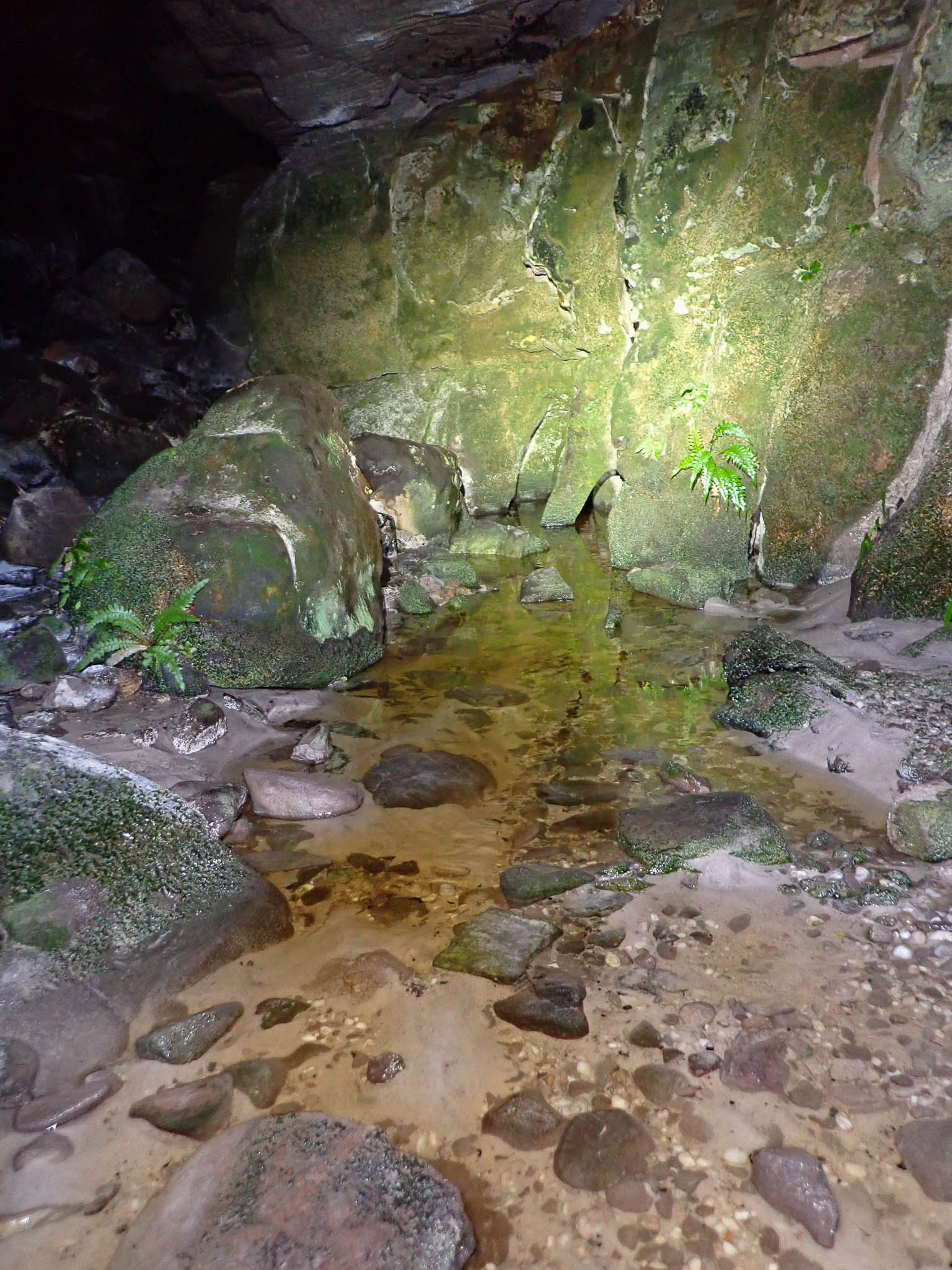
The Vivarium may seem to be an insignificant quartzite system consisting of some two hundred metres of passage, but it is an oddity in that it is unlike any of the other known caves in the area. The grotto is situated on the edge of the lower plateau or Back Table of Table Mountain with a beautiful entrance chamber opening about 140 metres up the cliff overlooking Orange Kloof. To gain entrance one has to approach from the top of the cliff, scrambling along ledges and steep banks. Striking features of the entrance chamber are filtered light reflected off the meandering stream, the highlighted greens of the ferns and mosses, and the peculiar orange fungi that grow on the walls – giving the impression of a vivarium. Plant life may be found up to ten metres into the chamber, supporting a rich variety of troglophiles and troglobites.
The Vivarium is very similar to the horizontal Kalk Bay caves with their small streams which flow along joints forming passages in decomposed quartzite. The Table Mountain systems near the Vivarium are deep dislocated joints thought to have been formed as a result of gradual tearing away of the narrow cliff section above Orange Kloof, assisted by water transporting away the broken down material. The dislocation in the rock as seen in the Wynberg Cave, for example, is clean and angular with the opposite walls matching like a mortice joint.
Although the Vivarium is close to Wynberg Cave, it is situated at the northern extremity of the caving area which appears to be a more stable section of the cliff. This could account for its horizontal development. The main passage is abruptly cut off by a collapse in one of its chambers, while the stream filters through a choke of boulders indicating possible passages behind the collapse.
Survey Plans


Photos